
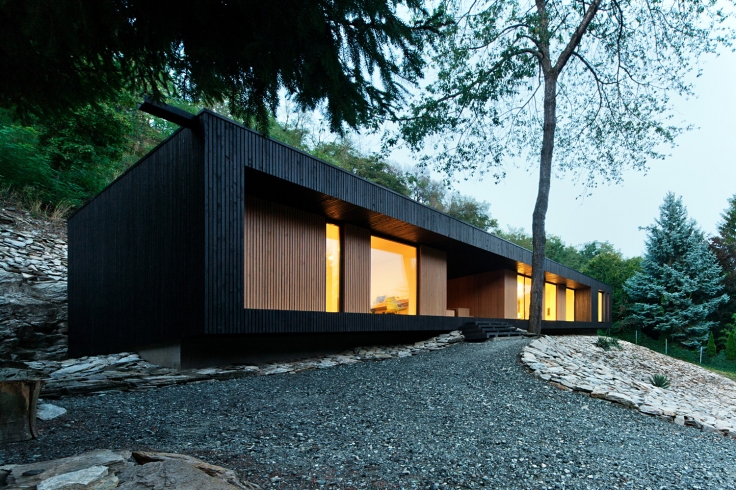
Why Intentional Design Matters More Than Square Footage in Modern Home Design
Perspective #001
In today’s housing market, square footage often dominates the conversation.
Buyers search for larger homes, open-concept layouts, luxury finishes, and expansive floor plans. Real estate listings highlight total square footage as a primary selling point.
But when it comes to modern home design, size alone does not determine livability, sustainability, or long-term satisfaction.
Intentional design does.
A thoughtfully designed 1,200-square-foot modern home can feel expansive, efficient, and deeply functional — while a 4,000-square-foot house without clarity in layout or purpose can feel disjointed and underutilized.
Square footage measures quantity.
Intentional design measures purpose.
And in today’s era of sustainable architecture, modular homes, prefab construction, and small-space living, purpose matters more than ever.
Intentional Design vs. Bigger Homes
Intentional home design focuses on:
- Efficient floor plan design
- Natural light optimization
- Smart storage solutions
- Energy-efficient building systems
- Sustainable materials
- Multi-functional living spaces
Instead of asking, “How big can we build?”
Intentional architects and builders ask:
- How will this home function daily?
- Does the layout improve flow between spaces?
- Are materials chosen for durability and sustainability?
- Does the design reflect modern living habits?
This mindset is especially critical in modular construction, prefab homes, dome homes, and contemporary residential architecture, where precision and purpose drive both performance and aesthetics.
Small Homes, Smart Design, and Modern Living
The rise of compact modern homes, net-zero construction, energy-efficient prefab housing, and minimalist architecture reflects a growing awareness that space, materials, and resources should be used with intention — not excess.
Thoughtful modular design is not a trend.
It is a response to changing priorities.
Intentional design:
- Reduces wasted space
- Increases efficiency
- Lowers environmental impact
- Enhances daily living
A smaller, well-designed home often:
- Uses less material
- Requires less energy
- Encourages simplified living
- Prioritizes quality over excess
This is not about shrinking ambition.
It’s about elevating purpose.
Sustainable Architecture and Long-Term Value
In modern residential construction, long-term value is not measured in square footage alone.
It is measured in:
- Energy performance
- Build quality
- Design longevity
- Adaptability over time
Homes built with intentional design principles often outperform larger homes in durability, sustainability, and overall livability.
Because the goal is not expansion.
The goal is alignment.
The SophistiCaves Perspective
At SophistiCaves, we believe the future of modern living lies in:
- Thoughtful architecture
- Innovative prefab and modular building systems
- Sustainable design practices
- Builders and designers who prioritize intention over trend
Modern, artful living is not about maximizing square footage.
It is about maximizing clarity, function, and integrity in every design decision.
Because when design is intentional, space expands in the ways that truly matter.